In the high-stakes world of corporate decision-making, the environment is just as important as the agenda. Gone are the days of stuffy, windowless boardrooms with flickering fluorescent lights and uncomfortable wooden chairs. In 2026, the meeting room has evolved into a high-performance zone—a place where design psychology, ergonomics, and technology converge to facilitate breakthroughs.
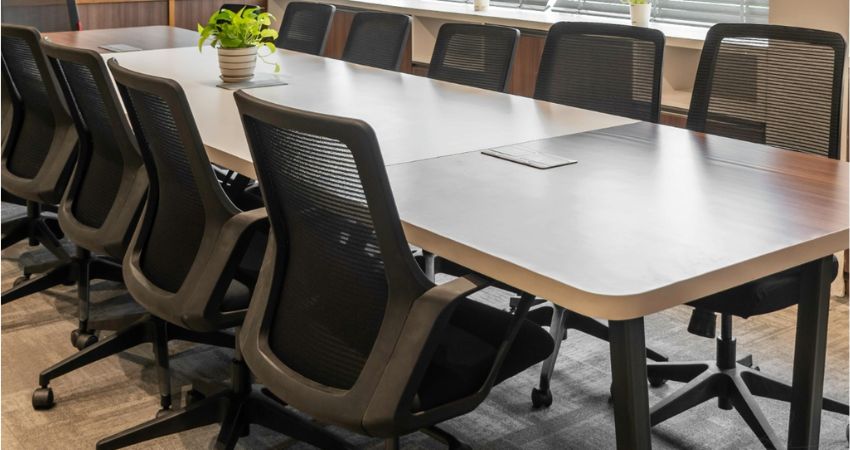
The image of this contemporary meeting room is a perfect blueprint for what a “Productivity Hub” should look like. It strikes a precise balance between corporate authority and inviting warmth. By dissecting the elements of this space, we can uncover the design secrets that make a meeting room not just a place to talk, but a place to succeed.
1. The Geometry of Collaboration: The Hybrid Table
The centerpiece of any meeting room is the table, and this design utilizes a fascinating “hybrid” approach.
- Material Contrast: Notice the table surface. It combines a clean, white central work zone with rich, dark wood-grain ends. This isn’t just an aesthetic choice; it’s functional. The white center acts as a “light reflector,” making documents and laptops easier to see, while the wooden ends ground the room and provide a sense of executive stability.
- Rounded Corners: The soft, rounded edges of the table are essential for flow. In a room where people are constantly moving in and out, sharp corners are physical and visual obstacles. Rounded edges encourage a more fluid, democratic seating arrangement where everyone feels equally part of the circle.
2. Ergonomics in Motion: The Mesh-Back Evolution
If your team is uncomfortable, their focus will inevitably wander. The seating choice in this room is a testament to the “Human-First” design movement.
- Breathable Performance: The chairs feature high-quality black mesh backs. Unlike leather or solid fabric, mesh allows for airflow, keeping participants cool during intense, hours-long strategy sessions.
- The “Uniform” Look: By using identical, sleek, black ergonomic chairs, the room maintains a sense of disciplined professional unity. The slim profiles of these chairs ensure that even when the room is at full capacity, it never feels crowded or heavy.
3. Lighting and Atmosphere: The Blind Ambition
Lighting can make or break a presentation. This room utilizes a masterful blend of natural and architectural light.
- Controlled Natural Light: The expansive windows are fitted with grey horizontal blinds. This is the gold standard for meeting rooms. It allows the moderator to precisely control the amount of glare on the TV screen while still letting in enough natural daylight to keep the team energized and alert.
- Architectural Linear Lighting: Suspended from the black-grid ceiling are sleek, linear LED fixtures. These provide “task lighting” directly onto the table surface without creating harsh shadows on the faces of the participants—a crucial detail for high-quality video conferencing.
4. The “Biophilic” Touch: Greenery for Focus
One of the most subtle but effective elements in this room is the placement of small, potted plants—specifically the bright green Pothos on the table and the windowsills.
- Mental Restoration: Scientific studies on Biophilia show that having greenery within your line of sight can reduce stress levels and increase attention spans. In a high-pressure meeting environment, these pops of nature act as “micro-restorative” points for the eyes.
- Color Psychology: Against the grey, black, and wood-tone palette, the vibrant green of the plants provides a necessary “life force” to the room. It makes the space feel inhabited and cared for, rather than just a sterile corporate box.
5. Technology Integration: The Seamless Command Center
A modern meeting room is only as good as its tech. In this interior, the technology is integrated so seamlessly that it becomes part of the architecture.
- The Media Wall: The large flat-screen TV is mounted against a dark wood-panelled accent wall, flanked by whiteboards. This creates a “Command Center” focal point. Having the whiteboard right next to the digital screen allows for “analog brainstorming” (hand-drawn ideas) to happen alongside digital presentations.
- Hidden Connectivity: While not explicitly visible, the “flip-top” cable management boxes on the table surface indicate that this room is ready for “Plug-and-Play” connectivity. No messy wires, no searching for adapters—just pure, uninterrupted workflow.
6. How to Recreate This High-Performance Look
Whether you are designing a startup office or refreshing a traditional corporate suite, you can apply these principles:
Step 1: The “Split-Tone” Table
Don’t settle for a plain, one-color table. If you have a wooden table, consider adding a white or light-grey vinyl “runner” or center inlay. This creates a modern, architectural look that instantly brightens the room.
Step 2: The Ceiling Grid
If your office has a standard “drop ceiling,” consider painting the metal grid black and replacing the tiles with dark charcoal or acoustic wood panels. This draws the eye upward and adds a “designer” feel to a standard office space.
Step 3: Layer Your Lighting
Move away from 2×4 fluorescent troffers. Install linear LED pendants that hang about 3-4 feet above the table. This creates a “canopy of light” that defines the meeting zone as a separate, focused area within the office.
7. The Psychology of the Professional Space
In 2026, the office is no longer a place you have to go; it is a place you choose to go for high-value interaction. A room like this facilitates that choice. It feels expensive but accessible, rigorous but comfortable.
When a client walks into this room, they see a company that is organized, tech-savvy, and attentive to detail. When an employee sits at this table, they feel that their work is being taken seriously. The dark wood panels provide the “weight” of traditional business, while the glass, mesh, and plants provide the “breath” of modern innovation.
Conclusion: A Space Built for Success
The meeting room in the image is more than just a collection of furniture; it is an engine for productivity. By prioritizing sightlines, ergonomics, and light control, the designers have created a sanctuary for the professional mind.
In the era of “Zoom fatigue,” a physical space that feels this sharp and focused is a powerful competitive advantage. It reminds us that while we can meet anywhere, we think best in spaces that were built for the task.