For decades, the office cafeteria was an afterthought—a utilitarian space of plastic trays, fluorescent lights, and sad, beige walls. It was a place to eat and leave, not a place to dwell. But as the nature of work has evolved to prioritize collaboration, wellness, and mental rejuvenation, the “corporate canteen” is undergoing a radical metamorphosis.
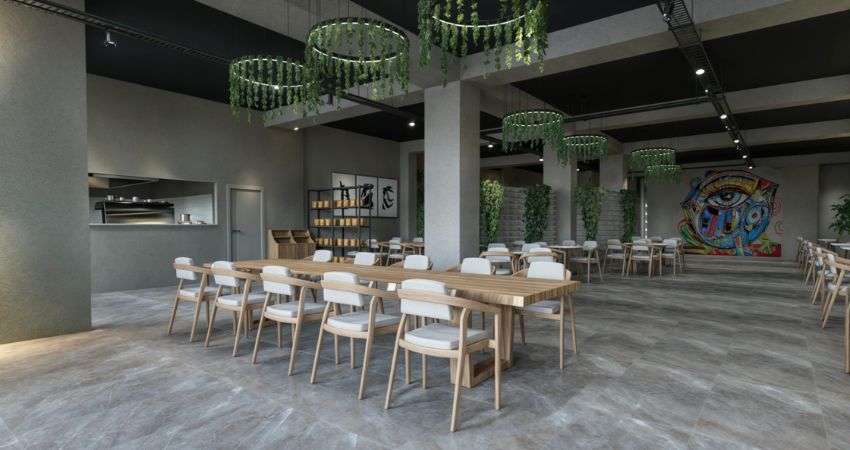
The interior design featured in this image is the perfect embodiment of this new philosophy. It is a space that feels less like a corporate annex and more like a high-end, urban bistro. Let’s dissect the elements of this sophisticated cafeteria and explore how modern companies are using design to transform “lunch hour” into “culture hour.”
1. The Power of “Biophilic” Design: Bringing the Outdoors In
The most striking feature of this space is the overhead greenery. Suspended circular planters dripping with lush foliage serve as a brilliant architectural intervention.
- Breaking the Grid: In a large office floor plan, things can easily become overly linear and “boxy.” These circular green installations break up the hard lines of the room, adding a soft, organic texture that is visually restorative.
- Psychological Restoration: Research into Biophilic Design—the practice of incorporating nature into built environments—shows that just being near greenery can reduce stress and improve cognitive function. By turning the ceiling into a living canopy, the designers have created a space that helps employees mentally “reset” during their break.
2. Industrial Chic meets Organic Warmth
The room balances two contrasting aesthetic worlds: Industrial Minimalism and Warm Scandinavian Minimalism.
- The Industrial Skeleton: The black exposed ceiling, minimalist track lighting, and concrete-grey structural pillars give the room an edgy, “lofts-of-Soho” vibe. This provides a clean, modern frame for the space.
- The Organic Softener: The heavy, light-oak communal tables and matching wooden-frame chairs provide the necessary warmth to balance that industrial coolness. By using wood as the primary furniture material, the space feels approachable and tactile, rather than cold and corporate.
3. Zoning for Different Personalities
A successful cafeteria must cater to different social needs. This design uses furniture layout to create three distinct “energy zones”:
- The Collaborative Core: The large, expansive communal table in the foreground is designed for “collision.” It’s built for large teams to gather, brainstorm over lunch, or host informal meetings. It encourages the serendipitous conversations that are the heartbeat of innovation.
- The Peripheral Retreat: In the background, smaller, more intimate tables suggest space for two or three people—ideal for a private one-on-one or a quiet moment of focus.
- The Gallery Wall: The vibrant, eye-catching mural on the far right adds an infusion of personality. Art in the workplace is not just decoration; it signals that the company values creativity and has a pulse outside of spreadsheets and targets.
4. Materials That Matter: The Floor and Walls
The choice of flooring is a masterstroke. The large-format, marble-effect grey tiles provide a sense of continuity.
- Seamlessness: By using the same flooring throughout the entire hall, the space feels unified and expansive. It prevents the room from feeling “chopped up,” which is essential in an open-plan office.
- Durability vs. Style: This tile choice is an excellent blend of corporate necessity and style. It is easy to clean and maintains a sleek, professional appearance while reflecting the ambient light from the track systems.
5. Lighting: Beyond the Fluorescent
Notice that there isn’t a single “buzzing” fluorescent fixture in sight. The lighting strategy here is multi-layered and intentional:
- Ambient Track Lighting: The black track lights provide a uniform wash of light across the entire area, ensuring the space feels bright and professional at all times.
- Focus Lighting: The circular hanging planters likely house hidden LEDs that spotlight the table surfaces below, creating a cozier, more intimate dining experience that feels distinct from the “work mode” of the rest of the office.
6. How to Elevate Your Own Office Cafeteria
If you are looking to revitalize your corporate space, you don’t need a total renovation. You can implement these core design principles in stages:
The “Communal Table” Mandate
If you only make one change, replace rows of small, circular café tables with a single, massive wooden communal table. It forces a behavior change, encouraging people to sit with colleagues they might not see every day.
The “Green Canopy” Effect
You don’t need an irrigation system to bring in nature. Use high-quality, artificial hanging vines or modular green wall panels. The psychological effect of seeing green above eye level is just as powerful as the real thing, without the maintenance headache.
Introduce Local Art
That mural on the wall is a game-changer. Consider commissioning a local artist to create a piece specifically for your office cafeteria. It creates a point of conversation and makes the space feel unique to your company’s identity, rather than a generic design-catalog installation.
7. The Culture of “The Third Place.”
In urban design, a “third place” is a social environment separate from the two primary environments of home and work. Modern offices are trying to turn the cafeteria into that third place—a space that feels different enough from the desk that it allows for a genuine mental break.
This cafeteria succeeds because it doesn’t look like a place where you “have” to be. It looks like a place where you “want” to be. In the era of hybrid work, the office has to work harder to earn the commute. A beautiful, inviting, and nature-filled dining space is one of the most effective tools for re-engaging employees and reminding them that a team is more than just a collection of remote boxes on a screen.
Final Thoughts: The ROI of Design
Some might argue that spending time and money on a cafeteria is “fluff.” But design is never fluff—it is a signal. A thoughtfully designed cafeteria tells employees: We care about your well-being. We want you to connect. We want you to feel refreshed.
When we design spaces for the human experience, we don’t just improve aesthetics; we improve the culture. We turn a building into a home, and a company into a community.
Does your current office space have a “third place” where you can recharge? If you could change one thing about your company cafeteria, would it be the seating, the lighting, or the vibe?