The traditional boardroom, for decades, has been synonymous with intimidation. Think: dark mahogany, heavy velvet drapes, and a long, imposing table designed to separate the “leaders” from the “followers.” But in the professional landscape of 2026, the best ideas aren’t being forged in high-pressure bunkers; they are being born in spaces that prioritize clarity, light, and democratic interaction.
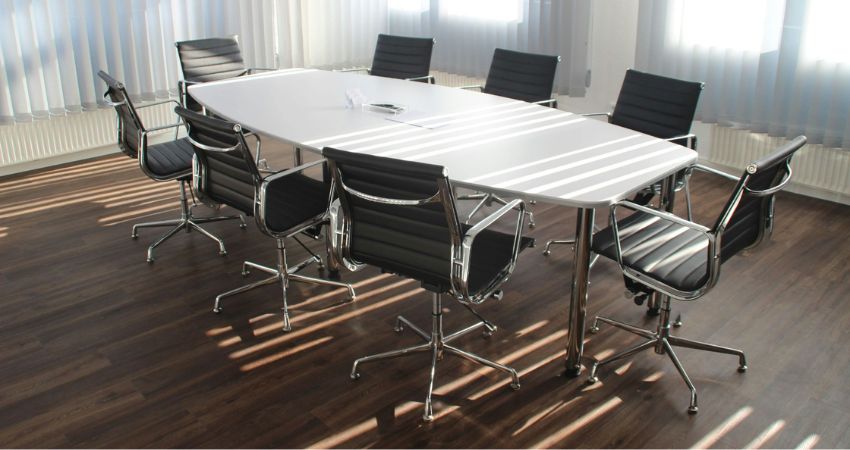
The meeting room featured in the provided image is a perfect testament to this shift. It is a space that favors minimalist transparency over heavy opulence. By stripping away the clutter and focusing on a high-contrast, clean design, it creates an environment where the focus remains entirely on the discussion at hand.
1. The Power of “Visual Silence.”
When designing a meeting room, your primary objective is to minimize distractions. The space in the image achieves this through what I call “Visual Silence.”
- Monochromatic Palette: By utilizing a crisp white table against high-contrast black chairs, the room feels organized and disciplined. The brain doesn’t have to process a myriad of colors, which allows for deeper focus during long brainstorming sessions.
- Streamlined Silhouette: The chairs are a classic mid-century inspired design with slim chrome frames. Unlike heavy, padded executive chairs that dominate the visual field, these are “light” on the eyes. They make the room feel larger and more professional, without the “heaviness” that often plagues traditional corporate interiors.
2. Light as a Design Material
The most striking feature of this room is the use of natural light, filtered through floor-to-ceiling vertical blinds.
- The “Striped” Glow: The light filtering through the blinds creates a beautiful, rhythmic pattern of light and shadow across the tabletop and the dark wooden floor. This is not just a functional lighting solution; it’s an atmospheric one. It makes the room feel alive and dynamic, rather than stagnant.
- The Importance of Daylight: Research consistently shows that access to natural light in meeting spaces improves employee mood and alertness. By using vertical blinds, the designers have allowed for privacy when needed, while still flooding the room with the vital, energizing light that is essential for a productive meeting.
3. Floor-to-Table Contrast: Grounding the Energy
The flooring choice—a rich, deep-toned walnut laminate—is a masterstroke of interior design strategy.
- Stability: The dark floor provides a “grounding” element. In a room that is dominated by white (table, walls, blinds), the dark floor keeps the room from feeling like a floating, sterile box. It adds warmth and texture, making the room feel like a professional environment rather than a hospital waiting area.
- Depth: The contrast between the dark floor and the light table creates a “floating” effect, which adds to the room’s overall sense of modern sophistication.
4. Designing for the “Democratic Meeting.”
The physical layout of your boardroom dictates how your team behaves. This image displays a classic, balanced meeting setup that promotes engagement.
- The Oval Table: The rounded corners of the white table are vital. Sharp, square corners on a meeting table can create a “combative” physical energy. Oval or rounded tables are inherently more inviting and collaborative, as they allow for better eye contact between participants sitting at the “corners.”
- Uniform Seating: By using identical, high-quality chairs, the room design reinforces a culture of equality. No one chair is “better” than the other, which subtly encourages everyone to contribute to the conversation.
5. How to Upgrade Your Meeting Room (Without a Full Renovation)
If your current boardroom feels stuck in the 1990s, you don’t necessarily need a multi-thousand-dollar overhaul. You can borrow principles from this image to refresh your space:
The “Light Refresh”
If your room feels dark and dated, start by removing heavy drapes and replacing them with clean, vertical or roller blinds. You will be shocked at how much larger and more modern your room feels once you let the light in.
The “Contrast Audit”
Look at your table and chairs. Are they all the same color? If everything is wood-tone-on-wood-tone, it’s going to look dull. Try swapping your existing chairs for something with a high-contrast finish (like black frames or black fabric) to instantly update the room’s look.
Declutter the Tabletop
The image shows a table that is almost entirely clear, save for the essentials. A “clean table” policy is the easiest way to improve meeting productivity. A cluttered table is a cluttered mind. Invest in integrated cable management to hide wires under the table, so you aren’t staring at a tangle of cords during your presentation.
6. The ROI of a Better Boardroom
Why invest in the interior of a meeting room? Because the space you meet in informs the quality of the decisions you make.
When you bring a client into a room that is bright, clean, and modern, you are subconsciously signaling that your company is forward-thinking and transparent. When you bring your team into that same room, you are signaling that you value their focus and their time.
The meeting room is the “cockpit” of your business. It is where your most expensive hours are spent, and where your most critical decisions are finalized. Investing in a space that minimizes distractions and maximizes comfort isn’t just about “style”—it’s a smart business decision.
Final Thoughts: The Future is Clear
The boardroom of the future is not about showing off power through heavy furniture and dark wood. It is about creating a space where the noise of the outside world is filtered out, and the clarity of thought can take center stage.
The room in the image succeeds because it understands that simplicity is the ultimate sophistication. By focusing on high-quality basics—good light, comfortable seating, and an uncluttered table—you can create a boardroom that doesn’t just host meetings, but actually helps drive them toward successful outcomes.