The traditional office breakroom has long been a place of functional necessity—a corner for a quick caffeine fix or a hurried lunch. However, as we navigate the professional landscape of 2026, the “corporate canteen” has evolved into something far more significant. It is now the epicenter of employee engagement and a physical manifestation of a company’s values.
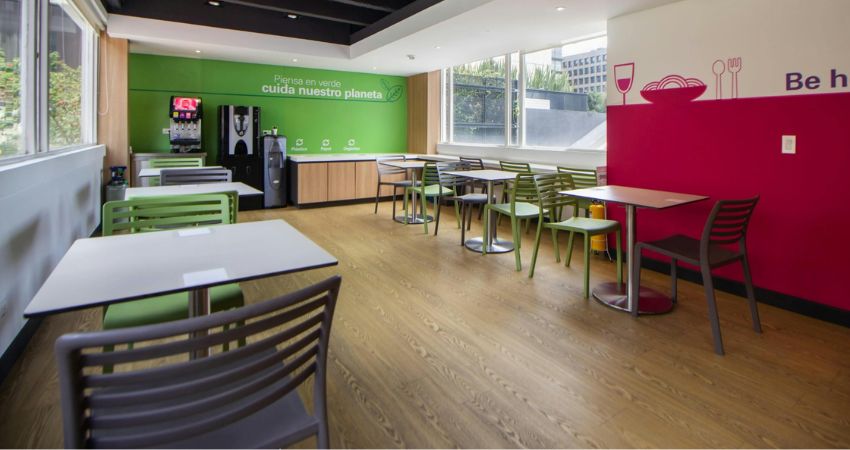
The office cafeteria featured in the image is a vibrant example of this transformation. By moving away from sterile, monochromatic environments and embracing bold colors, sustainability messaging, and industrial elements, this space creates a “high-energy sanctuary” for the modern workforce. Let’s explore the design pillars that make this cafeteria a masterclass in functional, high-impact interior design.
1. The Psychology of High-Contrast Color
In interior design, color is the most immediate way to signal a shift in environment. This cafeteria utilizes a high-contrast palette of Lime Green and Raspberry Red, set against a neutral base of white and black.
- Green for Growth and Renewal: The back wall features a saturated lime green, a color psychologically linked to freshness, health, and energy. In a corporate setting, this helps combat “mental fatigue.” It signals to the brain that it is time to refresh.
- Red for Appetite and Conversation: The bold raspberry red wall near the dining area is a classic hospitality choice. Red is known to stimulate the appetite and encourage social interaction. By placing it in the seating zone, the design subtly encourages employees to talk, laugh, and connect.
- Neutral Anchors: The black-painted industrial ceiling and light oak-style flooring prevent the bright colors from becoming overwhelming. They provide a sophisticated “frame” that keeps the room looking professional rather than juvenile.
2. Industrial Edge: The “Exposed” Aesthetic
One of the most modern elements of this interior is the dark, exposed ceiling. This design choice serves both an aesthetic and a practical purpose.
- Creating Height: Painting the ceiling beams, pipes, and ductwork a matte black makes them “recede” from view, creating the illusion of much higher ceilings. This prevents a smaller cafeteria from feeling claustrophobic, even when it’s full of people.
- The Creative Vibe: Exposed ceilings are hallmarks of creative agencies and tech startups. They suggest transparency and a “work-in-progress” energy that feels authentic and modern, contrasting beautifully with the polished, clean surfaces of the dining tables below.
3. Designing for the Planet: Sustainability as Decor
In 2026, a company’s environmental footprint is a major factor in employee satisfaction. This cafeteria takes a “Sustainability-Forward” approach by integrating environmental messaging directly into the decor.
The “Piensa en Verde” Philosophy
The green wall isn’t just a color choice; it’s an educational tool. The text “Piensa en verde, cuida nuestro planeta” (Think green, take care of our planet) paired with clear recycling icons above the waste station turns a mundane task into a shared mission.
- Functional Graphics: Using wall graphics to designate recycling zones (Plastico, Papel, Organico) ensures high compliance with waste management while keeping the area looking organized and intentional.
- Brand Identity: This type of design tells employees and visitors exactly what the company stands for without the need for a formal presentation. It’s “passive branding” at its finest.
4. Light and Air: Maximizing the “Outdoor-In” Feel
A cafeteria should never feel like a bunker. The large, expansive windows in this space are its most valuable asset.
- Natural Light vs. Fluorescents: While the ceiling features modern recessed spotlights for evening use, the daytime experience is dominated by natural light. This helps regulate the circadian rhythms of employees who might spend most of their day under artificial office lights.
- The View as Art: By keeping the window treatments minimal (simple white roller shades), the greenery and urban landscape outside become a dynamic part of the room’s wallpaper.
5. Furniture: Durability Meets Modernity
The seating choice in this cafeteria is a lesson in practical design. The slatted chairs in muted grey and lime green are chosen for three reasons:
- Airflow: Slatted designs are more comfortable for long periods as they allow for better ventilation.
- Easy Maintenance: In a food-service environment, spill-resistant and easy-to-wipe materials are a necessity.
- Weightlessness: The thin metal legs and minimalist profiles of the tables and chairs keep the floor area looking clear. This is crucial for maintaining a sense of order in a high-traffic area.
6. How to Replicate This “High-Energy” Look
If you want to bring this vibrant, modern energy to your own office breakroom, follow these four steps:
Step 1: Pick Your “Energy Pair”
Choose two bold, contrasting colors. Think Teal and Orange, or Navy and Yellow. Use one for a “focus wall” (like the recycling station) and the other for a “social wall” (near the seating).
Step 2: Go Dark Up Top
Don’t be afraid to paint your ceiling black or dark charcoal. It instantly hides architectural “clutter” like wires and pipes while making your colorful furniture pop.
Step 3: Use Typography
Walls don’t have to be blank. Use high-quality vinyl lettering to share your company’s mission statement or sustainability goals. It’s an inexpensive way to add “soul” to the room.
Step 4: Streamline the “Service Zone”
Group your coffee machines, water dispensers, and waste bins into a single, cohesive “station.” Use cabinetry that matches your flooring (like the light wood seen in the photo) to create a built-in, custom look.
7. The Result: A Space That Works
Ultimately, the success of an office cafeteria is measured by how many people use it—not just to eat, but to collaborate. A space like this, with its bright colors and clear messaging, acts as a “magnet.” It pulls people out of their silos and into a common space where ideas can be exchanged over a coffee or a meal.
In the modern workplace, the cafeteria is the “Watercooler 2.0.” It’s where the best ideas happen when people aren’t trying to have ideas. By designing for color, sustainability, and light, you aren’t just building a place to eat; you are building a place where your team actually wants to be.