The conference room is the strategic heart of any corporate environment. It is the place where high-stakes negotiations occur, vision is forged, and the company’s professional identity is most visible to clients and partners. In modern office design, the trend has shifted away from the dark, intimidating boardrooms of the past toward spaces that prioritize clarity, openness, and sophisticated contrast.
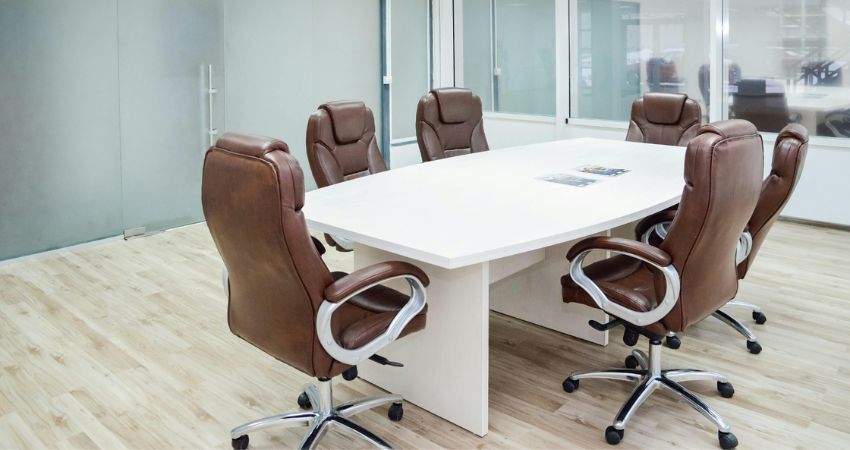
The provided image offers a definitive blueprint for a modern, executive-style meeting space. By analyzing its components—from the stark color palette to the architectural materials—we can derive several key principles for designing a conference room that balances authority with a contemporary, forward-thinking aesthetic.
1. The Strategy of “High-Contrast” Professionalism
The most immediate design lesson from this space is the use of high-contrast colors to define authority. The room utilizes a sharp dichotomy between crisp white and deep, earthy tones.
- The Power Table: The centerpiece of the room is a massive, solid-white conference table. White is psychologically associated with transparency, logic, and efficiency. In a meeting context, a white surface acts as a visual “reflector,” making physical documents, laptops, and presentations stand out clearly without visual competition from the furniture itself.
- Executive Seating: To balance the lightness of the table, the designers have opted for high-back executive chairs upholstered in a rich, chocolate-brown material. This choice provides “visual weight” to the room. While white suggests innovation, the deep brown tones suggest stability, experience, and tradition.
- Neutral Foundation: The light-oak wood flooring acts as a bridge between the two extremes. Its natural grain provides a soft, organic texture that prevents the high-contrast furniture from feeling too clinical or sterile.
2. Transparency and the “Glass Office” Movement
Modern corporate culture increasingly values transparency, and this is physically manifested through the use of extensive glass partitioning.
- Visual Connectivity: Rather than solid walls, this conference room is enclosed by floor-to-ceiling glass panels. This allows the room to feel integrated into the larger office ecosystem rather than isolated from it. It signals an open-door policy even when the doors are closed for private sessions.
- Acoustic Privacy vs. Visual Openness: The use of heavy-duty glass provides the necessary soundproofing for sensitive discussions while maintaining sightlines. This creates a sense of spaciousness, as the eye can travel beyond the physical confines of the room, reducing the “claustrophobic” feeling often associated with long board meetings.
- Frosted Accents: Notice the use of frosted glass on the entry door and side panels. This is a strategic design choice that provides a “blur” of privacy at eye level while allowing light to pass through. It is an excellent way to shield the specific details of a meeting from passersby without sacrificing the benefits of a glass-walled design.
3. Ergonomics as a Tool for Endurance
A conference room is only as effective as the comfort of its occupants. If the leadership team is physically fatigued, the quality of their decision-making will suffer.
- The High-Back Mandate: The chairs in this room are designed for “long-form” focus. The integrated headrests and pronounced lumbar support are essential for meetings that may stretch into several hours.
- The “Pedestal” Base: The chairs feature polished chrome five-star bases with high-quality casters. This allows participants to easily pivot between the central table and visual aids on the walls, promoting a more dynamic and less “stiff” interaction style.
- Democratic Layout: By using identical, high-spec chairs for every position around the table, the design reinforces a culture of collective contribution.
4. Lighting: The Invisible Productivity Driver
Lighting in a conference room must serve two masters: the clarity of physical work and the comfort of the human eye.
- Standardized Grid Lighting: The room utilizes a traditional 2×2 ceiling grid with recessed fluorescent or LED panels. This provides a uniform, “shadowless” wash of light across the entire table surface. This is crucial for environments where physical paperwork or blueprints are being reviewed.
- Reflective Surfaces: The white tabletop and light-colored walls work in tandem with the overhead lighting to bounce light throughout the room. This high “Light Reflectance Value” (LRV) means the room requires less energy to stay bright and feels more energizing to the occupants.
5. Safety and Functional Signage
In high-end interior design, functional elements should be integrated seamlessly. This room provides a clear example of how to handle required safety features without disrupting the aesthetic.
- Integrated Exit Signage: The glowing green “EXIT” sign above the door is a legal requirement, but its placement here is clean and unobtrusive. Its green glow actually provides a subtle color contrast to the otherwise neutral room.
- Minimalist Hardware: The long, vertical chrome door handles match the bases of the chairs, creating a “metal thread” that ties the room together.
6. How to Recreate This Executive Look
To achieve this level of professional polish in your own conference space, consider these three design steps based on the image:
- Invest in a “Statement” Table: If you want your room to feel modern and high-tech, choose a white or light-grey table with a minimalist base. It instantly lifts the brightness of the room and makes it feel larger.
- Use “Warm” Seating: To keep the room from feeling like a laboratory, choose chairs in warm tones like chocolate brown, cognac, or deep navy. These colors add a sense of luxury and comfort that balances out the “cool” white surfaces.
- Embrace Transparency: If possible, replace at least one solid wall with glass. If full transparency is too much, use a frosted film or a “gradient” frost to maintain a balance between openness and the privacy required for executive work.
Final Thoughts
The boardroom in the image is a masterclass in Modern Executive Minimalism. It proves that you don’t need a plethora of decor or complex colors to create a high-impact space. By focusing on quality materials, stark contrasts, and the clever use of glass, you can create a meeting environment that commands respect while fostering the clarity of thought necessary for modern business success.