In the world of corporate architecture, the director’s cabin is much more than a workspace; it is a manifestation of leadership, a sanctuary for strategic thought, and a theater for high-level negotiations. A well-designed executive office must strike a delicate balance between commanding authority and inviting comfort. It needs to say “decisive leader” while simultaneously offering the “warmth of a host.”
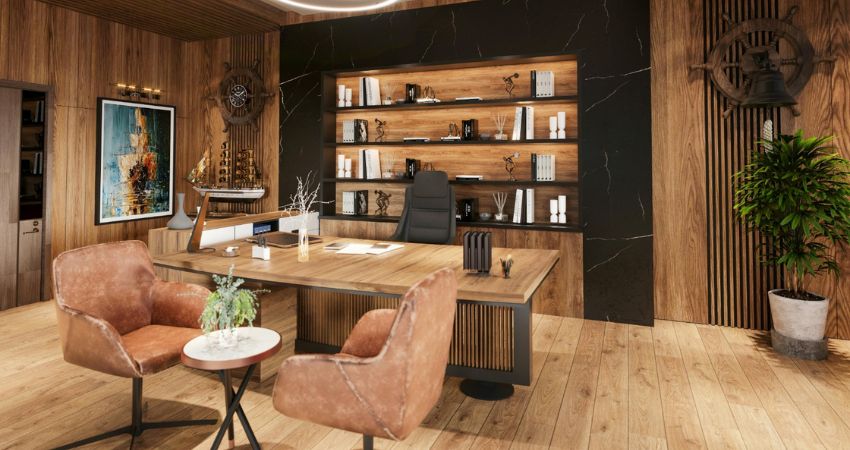
The interior featured in the provided image is an exquisite example of modern executive luxury. By blending nautical motifs, organic textures, and avant-garde lighting, this space redefines the traditional director’s office for the 2026 professional landscape. Let’s explore the design pillars that make this cabin a masterclass in executive style.
1. The Power of Materiality: Walnut and Marble
The most immediate takeaway from this design is the rich, tactile palette of materials.
- Vertical Wood Slats: The walls are dominated by floor-to-ceiling walnut paneling. The use of vertical slats on either side of the focal point adds height to the room and creates a rhythmic, architectural texture. Wood is essential in a director’s cabin because it brings an organic “grounding” element to an otherwise tech-heavy environment.
- The Black Marble Feature: Behind the executive desk sits a massive slab of black marquina marble with delicate white veining. This act of “framing” the director against a dark, stone backdrop is a classic power-design move. It provides a sharp, luxurious contrast to the warmth of the wood and ensures that the occupant is the undisputed focal point of the room.
2. Lighting as a Sculptural Statement
While traditional offices rely on recessed panels, this cabin treats lighting as a piece of art.
- The Halo Chandelier: Suspended from a recessed black ceiling tray is a series of overlapping, glowing LED rings. This “Halo” effect provides a soft, diffused glow that eliminates the harsh shadows typically found in office environments. It adds a sense of futuristic sophistication and breaks up the linear geometry of the wood paneling.
- Integrated Shelf Lighting: Notice how each shelf in the back credenza is individually illuminated. This “Museum Lighting” style turns simple books and trophies into curated artifacts, adding to the room’s sense of history and prestige.
3. The “Captain of the Ship” Theme
A director’s office often reflects their personal interests or the company’s “North Star”. This cabin utilizes a cohesive nautical theme that symbolizes navigation, exploration, and steady leadership.
- Symbolic Decor: Two large, wooden ship’s wheels (helms) are mounted on the slatted walls. To the left, a detailed model ship sits on a side cabinet. These aren’t just decorations; they are metaphors for “steering the company” through turbulent waters.
- Nautical Artistry: A large abstract painting featuring what appears to be a ship at sea adds a splash of blue and gold to the palette, tying the maritime theme together.
4. Furniture: Ergonomics Meets Heritage
The furniture in a director’s cabin must facilitate two modes of work: deep focus and collaborative hosting.
- The Executive Desk: The desk is a substantial slab of live-edge wood supported by a minimalist black metal frame. The front of the desk features fluted wood detailing that matches the walls, creating a “built-in” architectural feel.
- The Hosting Zone: In the foreground, two cognac-colored leather tub chairs sit across a small marble-topped coffee table. Cognac leather is a timeless choice for executive offices; it suggests heritage and quality. By placing these chairs at a slight angle rather than directly across from the desk, the design creates a more relaxed, “fireside chat” atmosphere for informal meetings.
5. Biophilia and the “Living” Office
Even in a space as formal as this, the presence of life is crucial.
- Strategic Greenery: A tall, vibrant indoor plant sits in a textured concrete pot to the right. Additionally, a small sprig of greenery is placed on the meeting table. These pops of green provide a “visual reset” for the director during long workdays, reducing stress and improving air quality.
How to Implement These Ideas in Your Cabin
You don’t need a sprawling corner office to capture this executive “vibe.” You can borrow these principles to upgrade any management space:
- The “Framing” Wall: If you can’t afford a marble slab, use a dark-toned wallpaper or a deep charcoal paint behind your desk. It creates an immediate focal point and makes your presence feel more grounded.
- Texture over Color: Instead of bright colors, play with textures. Combine vertical wood slats with smooth stone or leather. This creates a “quiet luxury” that feels much more expensive than it is.
- Upgrade the Lighting: Replace your standard office light with a sculptural pendant or a contemporary chandelier. It is the single most effective way to change the “mood” of a room from a cubicle to a cabin.
Final Thoughts
The director’s cabin in the image is a testament to the idea that work is a journey. By using a nautical theme and high-end materials, the space honors the gravity of leadership while providing a beautiful, restorative environment for the person at the helm.