In the evolving corporate landscape of 2026, the office is no longer just a place for heads-down productivity at a desk. It has transformed into a social hub designed for spontaneous collaboration, mental decompression, and cultural alignment. One of the most critical components of this new workplace is the office sitting area—a versatile space that bridges the gap between formal workstations and communal breakrooms.
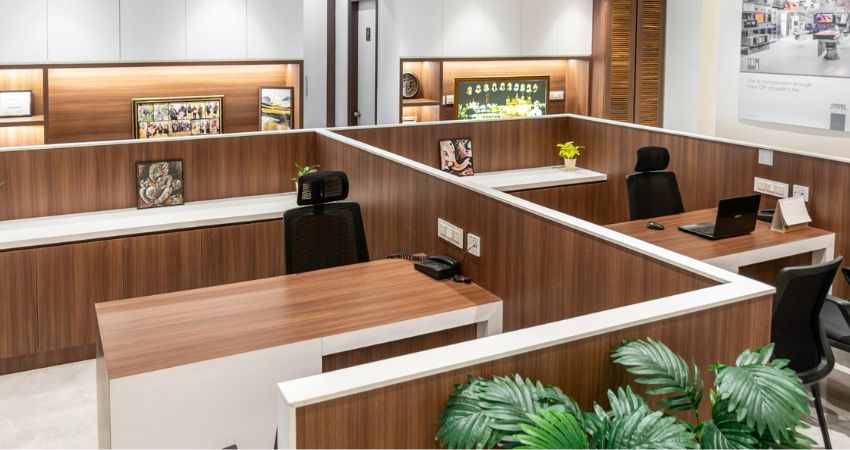
The provided image offers a masterclass in modern office sitting area design. By utilizing warm wood textures, integrated lighting, and ergonomic workstation proximity, this layout demonstrates how to create a “working lounge” that feels both professional and inviting. Let’s explore the interior design ideas that make this office sitting and work area a model for the future.
1. The Strategy of “Work-Lounge” Integration
A common mistake in office design is isolating sitting areas in far corners of the building. The featured design avoids this by integrating the sitting and semi-private work zones seamlessly.
- Proximity and Flow: Notice how the low-walled cubicles are arranged adjacent to deep, built-in storage and display ledges. This allows employees to easily transition from a focused task at their laptop to a more relaxed posture on a nearby bench or stool without leaving the social fabric of the team.
- Low-Profile Partitioning: The use of medium-height wood-panelled walls provides a sense of enclosure and “psychological safety” while seated, yet remains low enough to allow a standing person to see across the room. This maintains a feeling of openness and prevents the “cubicle farm” claustrophobia.
2. Materiality: The Warmth of Walnut and Oak
The choice of materials in a sitting area dictates the “vibe” of the entire office. This design relies heavily on wood grains to soften the industrial nature of a commercial building.
- Vertical Wood Paneling: The primary material used for the partitions and the recessed shelving is a rich, medium-toned wood laminate. Wood is a biophilic element that has been shown to reduce stress and lower heart rates in workplace environments.
- Contrast with Clean White: To ensure the room doesn’t feel too heavy or “library-like,” the wood is paired with crisp white countertops and upper cabinetry. This high-contrast look creates a modern, architectural feel that is both timeless and professional.
3. Lighting: The Invisible Architect
Lighting is the most powerful tool for defining a sitting area. In this space, the lighting is layered to create depth and focus.
- Recessed Warm LED Strips: One of the standout features of this design is the use of warm LED light strips tucked under the upper white cabinets. This creates a “glow” that highlights the wood grain and illuminates the display area. This type of indirect lighting is far more relaxing for a sitting area than harsh overhead fluorescent panels.
- Linear Ceiling Fixtures: Along the ceiling, a slim black linear light track provides uniform ambient light across the walkways. This creates a clean, “no-nonsense” aesthetic that complements the straight lines of the furniture.
4. Curating Culture through Display
An office sitting area is the perfect place to reinforce company values and history through curated displays.
- The “Niche” Concept: The design includes recessed wooden niches specifically for displaying framed photographs, awards, and cultural artifacts. By placing these at eye level for someone who is seated, the design ensures that the company’s “story” is always within the line of sight.
- Personalization vs. Professionalism: Small potted plants, such as the Pothos on the white ledge, add a touch of life and vibrancy. These small biophilic additions are essential in sitting areas to make them feel “lived-in” and welcoming rather than sterile.
5. Storage as a Design Element
Often, storage is hidden away in closets, but this design makes it a central part of the sitting area’s architecture.
- Hidden Below, Display Above: The lower portion of the wall consists of seamless wood cabinets for filing and office supplies. The middle section is for display, and the top section consists of white overhead storage. This “sandwich” of functionality ensures that the sitting area remains clutter-free.
- Symmetry and Order: The identical layout of the workstations and the cabinetry creates a sense of rhythmic symmetry. In a busy office, this visual order helps calm the mind and promotes a sense of organizational stability.
6. How to Recreate This Sitting Area Look
If you are designing or refreshing your office common areas, consider these three actionable ideas inspired by the image:
Step 1: Implement “The Ledge”
Instead of separate desks and tables, install a long, continuous white ledge or countertop along a wood-panelled wall. This acts as a catch-all space for laptops, coffee mugs, and decorative plants, unifying the room’s disparate elements into a single cohesive line.
Step 2: Focus on Indirect Lighting
Turn off the overhead “big lights” and install LED tape under shelves or behind panels. This immediately shifts the atmosphere of a space from “high-stress work” to “low-stress collaboration”.
Step 3: Verticality and Material Contrast
If your office has plain white walls, add vertical wood-grain panels to the lower half of the wall (wainscoting style) or to specific “niche” areas. The contrast between the warm wood and the cool white paint is the hallmark of modern high-end office design.
Conclusion: A Space for Human Connection
The office sitting area featured in the image is more than just a place to wait; it is a meticulously engineered environment for human interaction. By prioritizing material warmth, layered lighting, and functional storage, the designers have created a space that respects both the work and the worker.
In the modern workplace, the most valuable “real estate” is the space where people feel comfortable enough to share an idea. This design proves that with the right combination of wood and light, any office corner can become a sanctuary for creativity.