In the rapidly evolving corporate landscape, the office is no longer merely a collection of desks and computers. It has transformed into a strategic environment designed to foster spontaneous innovation, employee well-being, and cultural identity. At the heart of this transformation is the office sitting area—a versatile “third space” that bridges the gap between high-intensity focused work and complete communal relaxation.
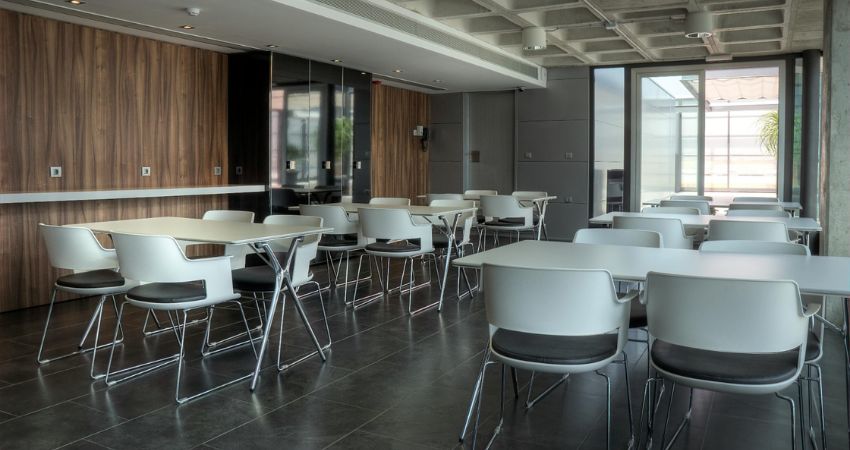
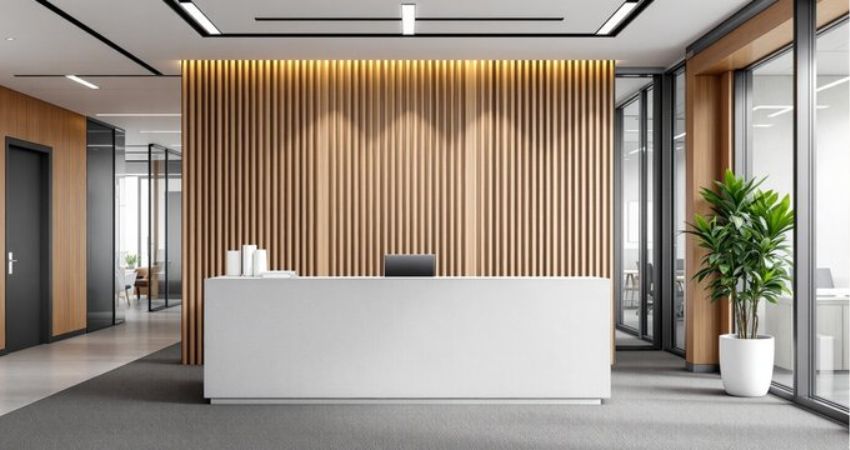
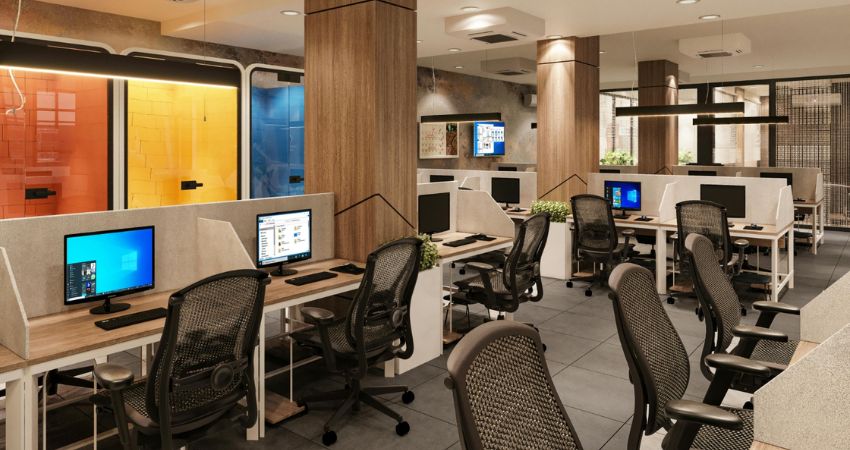
The provided design illustrates a sophisticated approach to the modern workspace, where sitting and collaboration zones are integrated directly into the architectural fabric of the office. By analyzing the use of warm materiality, layered illumination, and structured organization, we can derive essential interior design ideas for creating a high-impact sitting and collaborative hub.
1. The Strategy of “Integrated Flow.”
A common pitfall in traditional office layouts is the physical and psychological isolation of lounge or sitting areas. The design featured here rejects this by embedding the sitting and collaborative zones within the main workstation ecosystem.
- Proximity and Accessibility: The workstations are designed with low-profile partitions that encourage a sense of openness. This allows team members to pivot from their desks to a communal sitting area or a display ledge without losing their connection to the collective workflow.
- Defining Zones with Furniture: Rather than using solid floor-to-ceiling walls, the sitting area is defined by a change in furniture function—specifically, the introduction of a long, white communal ledge that serves as a touchdown point for informal discussions or a place to set down a coffee while reviewing plans.
2. Materiality: Building Comfort through Wood
The primary design language of this sitting area is rooted in Biophilic Design, which emphasizes the use of natural textures to reduce workplace stress.
- Warm Walnut and Oak Tones: The partitions and storage units are finished in a rich, medium-toned wood laminate. This choice is critical for sitting areas, as wood provides a tactile warmth that helps “de-institutionalize” the office environment.
- High-Contrast Sophistication: To keep the space feeling contemporary rather than rustic, the wood is paired with matte white countertops and cabinetry. This “white and wood” combination is a staple of modern professional design, offering a balance between organic comfort and clinical precision.
- Vertical Rhythms: The use of vertical wood slats on cabinet doors adds a textural detail that catches the light and adds visual interest to what would otherwise be a flat surface.
3. Layered Lighting: Setting the Mood for Collaboration
Lighting is the most effective way to signal a change in environmental function. While workstations require bright, uniform light, sitting areas benefit from a softer, more layered approach.
- Integrated LED Accents: A standout feature of this layout is the warm LED strip lighting recessed under the upper cabinets. This provides a soft “wash” over the display niches, highlighting company artifacts and providing a cozy glow for those seated nearby.
- Linear Architectural Lighting: Along the ceiling, slim black track lighting provides a sharp, industrial contrast to the warm wood below. This ensures the area remains well-lit for professional tasks while the secondary accent lights create the “atmosphere” necessary for a lounge or sitting zone.
4. The “Gallery Wall”: Curating Company Identity
An office sitting area provides a unique opportunity to reinforce corporate culture and history to both employees and visitors.
- Display Niches: The design utilizes recessed wooden shelving units to display framed photographs, awards, and historical milestones. By integrating these into the sitting area, they become conversation starters during informal meetings.
- Strategic Biophilia: Small potted plants, such as the Pothos seen on the white display ledge, add a vital “pop” of green. In an interior dominated by wood and metal, living greenery is essential for softening the hard edges and improving air quality.
- Structured Storytelling: The precise arrangement of these frames within the niches creates an orderly, curated look that reflects a detail-oriented and professional company culture.
5. Storage as a Functional Partition
In modern office design, every element must work twice as hard. Here, the storage solution is also a tool for spatial organization.
- Three-Tier Functionality: The wall storage is divided into three distinct zones: lower wood-paneled cabinets for heavy filing, a middle “horizon” for display and lighting, and upper white cabinets for less-frequently used items.
- Clutter Management: By providing ample, attractive storage right next to the sitting and collaboration area, the designers ensure that the communal space remains clear of the “paper clutter” that often kills the aesthetic of a professional office.
6. How to Implement These Ideas in Your Office
If you are looking to create or refresh a sitting and collaboration area, consider these three core design steps derived from the image:
Step 1: Design for “Touchdown” Productivity
Install a long, continuous counter (a “ledge”) at a comfortable standing or bar-stool height along a main walkway. This creates a natural “sitting area” where people can gather briefly without the formality of a conference room.
Step 2: Use Material Continuity
Select one wood grain and one neutral color (like white or charcoal) and apply them consistently across all built-in furniture. This visual repetition makes even a small sitting area feel expensive and intentionally designed.
Step 3: Prioritize Indirect Light
Move away from 100% overhead lighting. Install LED tape or small puck lights under shelves or cabinets to create warm focal points. This immediately makes the sitting area feel like a welcoming “oasis” rather than just another part of the factory floor.
Final Thoughts
The office sitting area featured in the design is a testament to the power of structured comfort. It rejects the idea that a “break area” needs to be beanbags and ping-pong tables, opting instead for a sophisticated, high-texture environment that respects the professional nature of work while acknowledging the human need for warmth and connection.