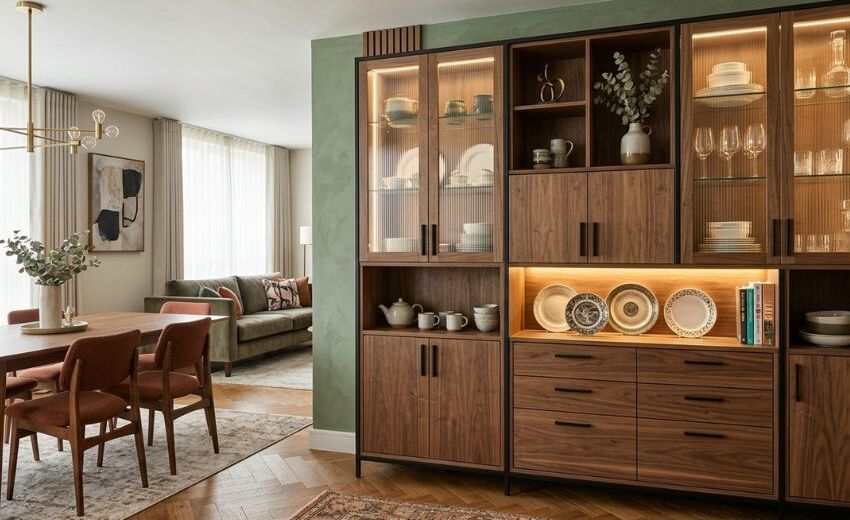
In the realm of interior design, the dining area is often considered the soul of the home—a place where stories are shared over steaming mugs and celebrated across laden plates. But where does the artistry of the meal live when the guests have gone? The answer lies in the crockery unit.
Far more than just a storage solution, a well-designed crockery cabinet is a curated gallery of your personal style. Today, we’re dissecting a stunning example of modern cabinetry (pictured above) to explore how texture, light, and materiality come together to create a functional masterpiece.
1. The Warmth of Walnut: Choosing the Right Canvas
The first thing that strikes you about this unit is the rich, deep wood grain. The use of walnut—or a high-quality walnut finish—provides an immediate sense of “grounding.”
- Visual Texture: Unlike flat, painted surfaces, the wood’s natural vertical grain adds height to the shelves. It creates a rustic yet refined backdrop that makes ceramic glazes “pop.”
- Color Palette: The mid- to dark-chocolate tones of the wood serve as a neutral anchor. This allows you to mix and match eclectic dinnerware—from deep indigo blues to earthy ochres—without the space feeling cluttered or mismatched.
2. The Magic of Fluted Glass
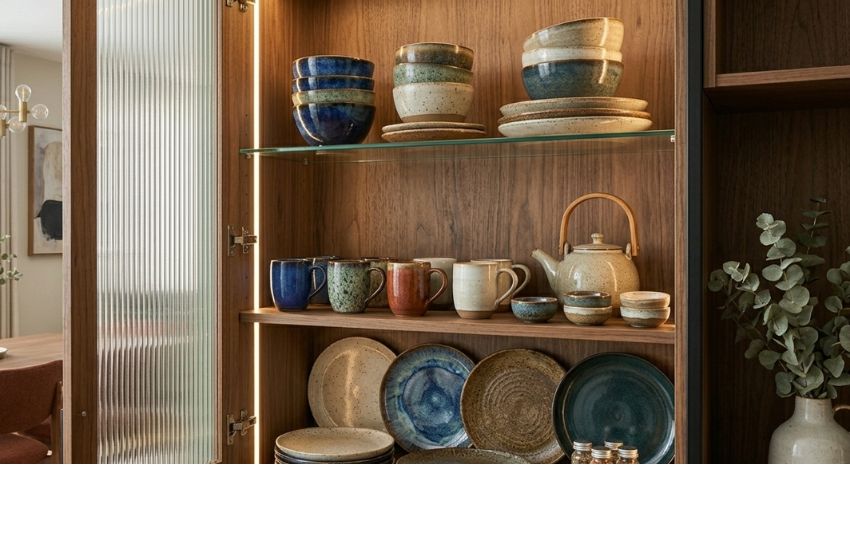
To the left of the frame, we see a glimpse of the cabinet door, and it’s a design enthusiast’s favorite: fluted (or ribbed) glass.
Standard clear glass can sometimes feel demanding—it requires your stacks of plates to be perfectly aligned 24/7. Fluted glass, however, offers the perfect compromise. It provides a blurred silhouette of the items behind it, adding a layer of mystery and sophisticated texture. It catches the light in vertical lines, echoing the wood grain and creating a rhythmic, architectural feel.
3. Illuminating the Details: Integrated LED Strips
Lighting is the secret ingredient that transforms a “cupboard” into a “showcase.” Notice the vertical LED strip recessed into the side panel of the unit.
- Depth and Dimension: By lighting the unit from the sides rather than just the top, the shadows are softened. This prevents the back corners from looking like “black holes” and highlights the silhouettes of the mugs and teapots.
- Ambiance: At night, a lit crockery unit serves as secondary mood lighting for the dining room. It casts a warm, inviting glow that makes the entire room feel more expensive and curated.
4. Material Play: Glass vs. Wood Shelving
This design smartly utilizes two different shelving materials to balance weight and visibility:
- The Glass Upper Shelf: Using a tempered glass shelf for the top tier is a brilliant move. It allows light to filter down through the stacks of bowls, keeping the top half of the cabinet feeling “airy.”
- The Solid Wood Mid-Shelf: For heavier items or high-traffic pieces like mugs and teapots, a solid wood shelf provides visual “weight” and structural sturdiness. It acts as a horizon line for the eye to rest on.
5. Styling Your Unit: The “Organized Eclectic” Look
The image demonstrates a masterclass in styling. If you’re looking to replicate this look, follow these three rules:
- Stacking Heights: Don’t just line everything up. Notice how the bowls are stacked in groups of three or four, while the plates are leaned against the back wall to show off their patterns.
- Color Families: The ceramics shown stay within an earthy, artisanal palette. Blues, teals, creams, and terracottas work beautifully together because they all share a “stoneware” texture and a matte-to-satin finish.
- Functional Clusters: Grouping “like with like”—mugs in a row, a tea set together—makes the unit feel organized. Adding a touch of greenery, like the eucalyptus sprig seen to the right, softens the hard edges of the wood and ceramic.
Final Thoughts
A crockery unit shouldn’t just be a place where you hide your “good china.” As seen in this design, it is an extension of your home’s personality. By combining warm wood, textured glass, and strategic lighting, you create a focal point that is as much about art as it is about utility.
Whether you’re renovating a modern apartment or looking to add a touch of contemporary warmth to a traditional home, this blend of materials offers a timeless blueprint for success.