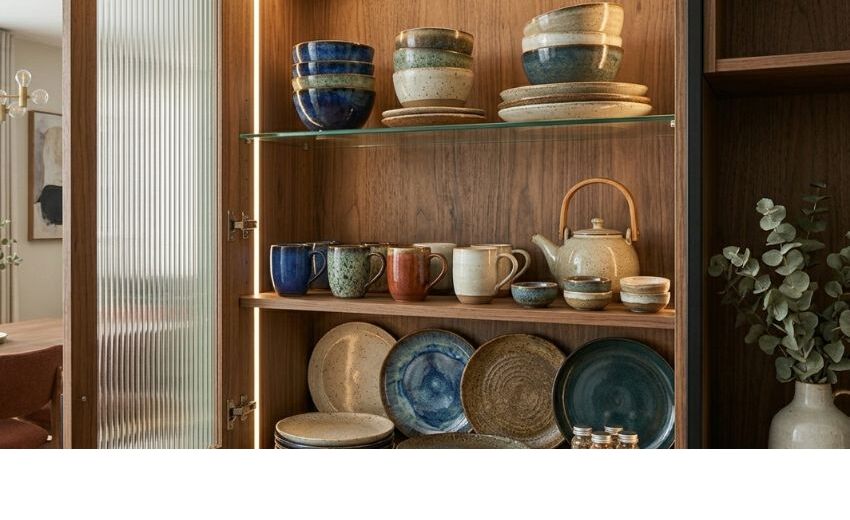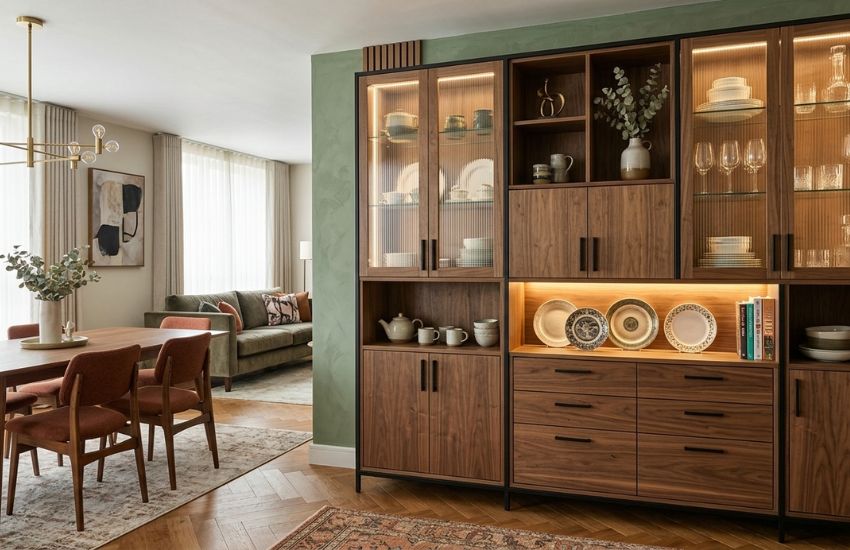
A crockery unit is no longer just a storage cabinet tucked into a dining room corner. In modern homes, it has become a design statement that reflects personality, improves organization, and enhances the overall look of the space. The crockery unit shown in this image is a perfect example of how storage can be elevated into an interior feature that feels both practical and luxurious.
What makes this design special is the balance between open display and closed storage. The wooden finish brings warmth into the room, while the glass-front cabinets and soft lighting create a refined visual effect. It blends beautifully with the adjoining dining and living spaces, making the entire home feel cohesive and well-planned.
Why a Crockery Unit Matters in Home Interiors
A crockery unit serves multiple purposes in a home. It helps store dinnerware, glassware, serving bowls, and decorative items safely while also stylishly showcasing selected pieces. For families that love hosting guests, a crockery unit keeps essentials organized and easily accessible. At the same time, it contributes to the visual character of the room rather than hiding away as a purely functional piece.
In homes where the dining area is visible from the living room, the crockery unit often becomes one of the focal points. That is why choosing the right design, material, and placement matters so much. A well-designed unit can make a compact room feel more polished, while a poorly planned one can look bulky and interrupt the flow of the space.
Design Style Seen in the Image
The crockery unit in the image reflects a modern, contemporary style with a strong, warm-wood aesthetic. The dark walnut tone gives it a rich, premium appearance, while the clean lines keep it from feeling heavy. The frame is structured but not overly ornamental, which makes it ideal for homes that prefer subtle sophistication over decorative excess.
The combination of solid cabinets and glass display sections is especially effective. Closed storage helps hide everyday clutter, while open or glass-enclosed shelves allow you to display your best crockery, glassware, and decorative accents. The internal lighting adds depth and makes the unit feel inviting in the evening. This is the kind of detail that transforms a regular cabinet into an elegant interior feature.
The surrounding décor also plays an important role. The dining table, upholstered chairs, soft drapery, and warm flooring create a balanced environment. The crockery unit does not compete with the room; instead, it complements the overall palette and reinforces the home’s calm, curated mood.
Best Materials for Crockery Units
Choosing the right material is one of the most important decisions when planning a crockery unit. The image suggests a wood-finish structure, which is one of the most popular options because it offers durability and timeless appeal. Engineered wood, laminate, veneer, and solid wood are all commonly used, depending on budget and style preferences.
Here are some material choices that work well:
- Veneer finish for a rich natural look.
- Laminate for affordability and easy maintenance.
- Solid wood for a premium and long-lasting feel.
- Glass shutters for display sections.
- Metal handles or slim hardware for a modern touch.
If you want a sleek, urban appearance, a combination of wood and glass is often the best choice. It gives the unit visual variety and prevents the design from looking too flat. The use of warm lighting inside glass compartments also enhances the display of crockery and decorative objects.
Smart Storage Features to Include
A crockery unit should be beautiful, but it should also work hard behind the scenes. Good storage planning ensures that you can keep everything neat and easy to reach. The unit in the image appears to combine shelves, drawers, and enclosed cabinets, which is an excellent layout for daily use.
Useful storage features include:
- Adjustable shelves for different plate and bowl sizes.
- Deep drawers for cutlery, serving tools, and table linens.
- Glass cabinets for fine dinnerware and collectibles.
- Closed lower units for less attractive but necessary items.
- Dedicated bottle or tray compartments for entertaining essentials.
When designing for your home, think about what you actually own and use. If you have formal dinner sets, separate display areas are ideal. If you use the same plates every day, prioritize easy-access storage with drawers and lower cabinets. A well-organized crockery unit should make life simpler, not more complicated.
Placement in the Home
The location of a crockery unit can influence the entire flow of the home. The image shows the unit placed beside the dining area and near the living space, which is a very practical and elegant arrangement. This placement works especially well in open-plan homes because it connects the dining zone with the rest of the interior.
Some common placement ideas include:
- Along a dining room wall.
- In an open-plan dining-living transition area.
- Near the kitchen entrance for easy serving.
- As a full-height feature wall in larger homes.
If your home is compact, a vertical crockery unit can save space while still offering enough storage. If you have a larger dining area, a wider wall-mounted or floor-to-ceiling unit can make the room look more complete. The key is to ensure the design fits the proportions of the room instead of overpowering it.
Styling Ideas for the Display Shelves
One of the most attractive parts of a crockery unit is the display area. The image shows how beautifully dishes, glassware, and décor objects can be arranged to create a designer look. The secret is not to overfill the shelves. Instead, use a few carefully chosen items that look intentional and elegant.
You can style the shelves with:
- Matching plate sets in neutral tones.
- Glass tumblers, wine glasses, or stemware.
- Ceramic vases with fresh or dried stems.
- A few books for a layered look.
- Small sculptural decor pieces.
Try to follow a color theme so the shelves look organized. White, beige, brown, and muted green tones work especially well in warm contemporary interiors. Lighting also matters: soft, hidden LEDs can highlight the objects and add a luxurious glow in the evenings.
Color Palette and Lighting
The color palette in the image feels earthy, calm, and premium. The wooden brown finish, soft green wall, and light neutral furniture together create a harmonious atmosphere. This is a great example of how a crockery unit should not feel isolated from the rest of the home. Instead, it should blend with the surrounding colors and textures.
Lighting is equally important. The built-in warm LEDs inside the unit make the display feel special and also improve visibility. In homes with low natural light, this kind of illumination can completely change the mood of the space. If you are planning a crockery unit, always think about how it will look in the daytime and at night. A well-lit unit can act almost like an art installation within the room.
How to Make It Practical
Beauty is important, but a crockery unit should still be convenient to use every day. For best results, place frequently used items at waist height and reserve upper shelves for special occasion crockery. Keep heavier items in lower cabinets so they are easier and safer to access. If you entertain often, add sections for serving bowls, trays, napkins, and barware.
Maintenance is also easier when the design is simple and thoughtful. Avoid too many tiny shelves that become difficult to clean. Glass doors can protect your display from dust, while closed cabinets keep everyday clutter hidden. The best crockery unit is one that looks elegant without demanding too much effort to maintain.
Final Thoughts
A crockery unit is much more than a cupboard for dishes. It can become one of the most refined elements in a home interior when designed with care. The image you shared shows exactly how wood, glass, lighting, and layout can work together to create a piece that is both beautiful and useful.
If you are planning one for your home, focus on three things: storage, style, and proportion. Choose materials that suit your interior theme, keep the display balanced, and make sure the unit serves your daily needs. When done well, a crockery unit becomes a quiet luxury—something that makes the house feel organized, welcoming, and complete.