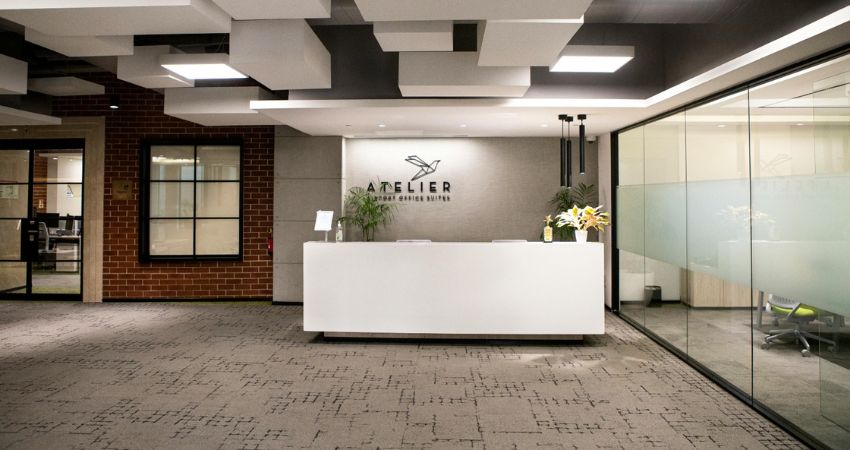
In the contemporary corporate world, the office reception area has moved beyond being a mere waiting room; it is now the physical embodiment of a company’s brand, values, and professional standards. The reception serves as the critical “first touchpoint” for clients, partners, and prospective employees. As illustrated in the provided image of the “Atelier” office suites, a high-impact reception area is a masterclass in balancing architectural daring, functional minimalism, and welcoming atmosphere.
By breaking down the design elements of this specific space—from its avant-garde ceiling to its strategic use of materials—we can derive sophisticated interior design ideas for any modern office reception.
1. Architectural Statements: The Ceiling as a Focal Point
One of the most striking features of the Atelier reception is the use of a multi-layered, geometric ceiling design.
- Dynamic Volume: Traditional flat office ceilings often feel institutional and sterile. This design uses staggered, white rectangular blocks of varying depths to create a sense of movement and volume. This “architectural canopy” immediately draws the eye upward, making the space feel larger and more intellectually stimulating.
- Integrating Light: The geometric blocks aren’t just for show; they serve as a housing for recessed square lighting. This allows for a clean, integrated look that avoids the clutter of traditional hanging fixtures while providing a soft, diffused glow that is essential for a welcoming reception.
- Acoustic Management: Although not visible, layered ceiling structures like this are often functional, helping to dampen sound in high-traffic entryways, ensuring that the reception remains a place of calm.
2. Material Synergy: Industrial Meets Refined
Successful reception design often relies on the “push and pull” of different materials. The Atelier space uses a palette of brick, concrete, glass, and wood to create a rich, tactile environment.
- The Warmth of Exposed Brick: To the left of the reception desk, a classic red-brick wall provides a grounded, traditional contrast to the more modern elements. Brick introduces texture and warmth, preventing the reception from feeling overly “cold” or clinical.
- Modern Concrete Finishes: The main brand wall behind the desk features a sleek, grey concrete-look paneling. This industrial finish signals durability and modern sophistication, providing a neutral backdrop that makes the black company logo stand out.
- The Transparency of Glass: Large-format glass partitions with black frames enclose the adjacent meeting or work areas. This design choice promotes a culture of transparency and openness, allowing visitors to see the “buzz” of the office without compromising the acoustic privacy of the staff.
3. The Reception Desk: The “Monolithic” Anchor
The desk itself is the centerpiece of any reception area. In this design, it is treated as a clean, monolithic block.
- Minimalist Geometry: The desk is a pure white, solid rectangular form. By avoiding visible handles, drawers, or clutter on the top surface, the desk communicates a sense of order and efficiency.
- Strategic Proportions: The desk is long enough to accommodate multiple receptionists if needed but remains streamlined enough to allow for easy traffic flow around it.
- Functional Lighting: Slim, black cylindrical pendant lights hang to the right of the brand wall, providing dedicated task lighting for the receptionist and adding a vertical design element that breaks up the horizontal lines of the desk.
4. Branding and Visual Identity
A reception area must tell the visitor where they are without being aggressive. The “Atelier” design handles this with understated elegance.
- The Hero Logo: The logo—a stylized origami bird—is placed at eye level on the concrete-finish back wall. The use of a matte black finish against the light grey background is high-contrast but sophisticated.
- Typography: The clean, sans-serif font used for “Atelier” reinforces a modern, tech-forward, or creative brand identity.
- Subtle Accents: Notice the small gold trophy and the neatly placed plants on the desk. These small “lifestyle” touches humanize the brand and signal success and vitality.
5. Flooring and Transition Zones
Flooring is often the most overlooked part of reception design, yet it dictates the “feel” of the walk-in experience.
- Textural Contrast: The reception uses a patterned grey carpet with a subtle, grid-like design. Carpet is an excellent choice for receptions because it absorbs the sound of footsteps and provides a softer, more comfortable underfoot feel than tile or hardwood.
- Defining the Path: The change in ceiling height and lighting directly above the desk creates a “zone” that naturally leads the visitor toward the check-in point.
6. Biophilic Integration: The “Green” Welcome
Incorporating nature into a reception area is one of the most effective ways to reduce visitor anxiety and improve air quality.
- Strategic Greenery: Potted plants, like the ones seen behind the desk and on the counter, break up the geometric lines of the architecture. The organic shapes of the leaves provide a necessary visual “relief” from the straight lines of the brick and concrete.
- Natural Light: While the image focuses on interior lighting, the large window on the brick wall suggests the presence of natural light, which is essential for keeping both the plants and the staff energized.
Actionable Reception Design Ideas Derived from the Atelier Space
If you are looking to renovate or design an office reception, consider these key takeaways from the “Atelier” model:
I. Think “Up”
Don’t settle for a standard ceiling. Use suspended panels, acoustic baffles, or geometric blocks to create visual interest and manage sound. A unique ceiling can define the entire personality of the space.
II. Layer Your Neutrals
Combine three distinct textures: one “rough” (like brick or stone), one “modern” (like concrete or metal), and one “clean” (like white laminate or glass). This creates depth without requiring a loud or distracting color palette.
III. Keep the Desk “Clean”
Invest in a desk that has integrated cable management and ample hidden storage. A cluttered reception desk suggests a cluttered business. The “Atelier” desk demonstrates that a simple white block can be incredibly powerful when executed well.
IV. Use “Zonal” Lighting
Avoid uniform fluorescent lighting. Use a mix of recessed ambient lights for the general space and focused pendant lights for the desk area to create a sense of hierarchy and focus.
Conclusion: The Psychology of the Entryway
The “Atelier” office reception works because it doesn’t just provide a place to sit; it provides an experience. The combination of the heavy, textured brick and concrete with the light, airy geometric ceiling creates a space that feels both established and innovative.
In modern office design, the reception area is your handshake. By using architectural features to guide the eye and a thoughtful mix of materials to engage the senses, you can ensure that your company’s first impression is one of professionalism, creativity, and welcome.