In the modern corporate landscape, the reception area is significantly more than just a place to wait for a scheduled meeting. It is the company’s physical “handshake.” Within seconds of walking through the door, a visitor forms a subconscious opinion about your brand, your culture, and your attention to detail. This initial impression—often solidified before a word is spoken—can influence the trajectory of a negotiation, the outcome of a job interview, and the comfort of your guests.
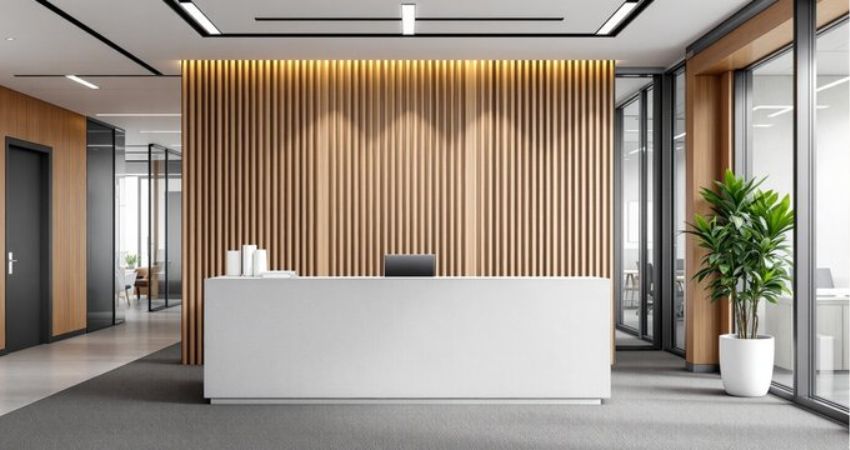
The reception space showcased in the accompanying image is a masterclass in modern design, perfectly balancing executive warmth with clean, minimalist efficiency. By analyzing the interplay of texture, lighting, and spatial arrangement, we can derive key design principles that help transform a standard office entryway into a high-impact professional sanctuary.
1. The Strategy of Material Synergy
One of the most effective ways to design a reception area is through the careful layering of textures. In the featured design, the architect has masterfully avoided the “sterile” office aesthetic by marrying two powerful materials: organic, warm wood and cool, refined stone.
- The Power of Wood Slats: The vertical wood-slat wall paneling is a quintessential element of modern executive design. The vertical orientation draws the eye upward, creating a visual sense of height and majesty. Psychologically, wood brings an organic, biophilic element into the office, which helps to ground the space and reduce the “hard” feeling of commercial architecture.
- Stone as a Statement: The reception desk, topped with what appears to be a sleek, marble-patterned slab, acts as the room’s anchor. Stone signifies permanence, luxury, and reliability. By using stone on the primary interaction point, the company is communicating that they are a stable and serious partner.
- The Contrast Equation: The key to success here is the contrast. If the entire room were wood, it might feel like a sauna; if it were all stone, it might feel like a bank vault. By balancing these textures, the design creates a feeling of “quiet luxury”—sophisticated, welcoming, and balanced.
2. Lighting as an Architectural Material
In traditional reception design, lighting was an afterthought—a grid of harsh fluorescent panels humming overhead. Modern design treats lighting as a fundamental material, just as important as the walls or the flooring.
- Cove and Recessed Lighting: The lighting in the featured reception is soft, indirect, and atmospheric. Notice the hidden light sources that wash the wood-slat walls. This technique, often called “grazing” or “cove lighting,” creates a gentle depth on the surface, emphasizing the texture of the wood grain.
- Task vs. Ambience: While the general reception area should be warm and inviting, the desk itself requires sufficient light for the receptionist to manage documents and technology. The key is to hide the source. By using recessed lighting that focuses on the desk surface while keeping the walls and ceiling softly lit, the designer creates a “halo” effect that guides the visitor’s eye naturally toward the reception staff.
- The Mood Factor: A dark, moody reception can feel mysterious, while a bright, washed-out reception can feel like a hospital. The balanced approach seen here uses warm-temperature LEDs (around 2700K to 3000K), which are much more flattering for human interaction and help to foster a sense of calm.
3. The Psychology of Spatial Flow
The reception area must be functional for both the visitor and the staff. The design in the image demonstrates a clear understanding of “spatial hierarchy”—the art of guiding a human through a space without using verbal instructions.
- Defining the “Threshold”: The placement of the desk creates a natural barrier that is both welcoming and secure. A visitor immediately understands that the reception desk is the first point of contact. This clear demarcation is essential for office security and for ensuring that visitors don’t feel lost or intrusive when they enter.
- Seating as a Service: The seating in a reception area should be an extension of the brand’s hospitality. It needs to be comfortable enough for a 15-minute wait but formal enough to suit a business environment. The layout should prioritize sightlines—a visitor should have a clear view of the entrance and the path forward, but they shouldn’t feel like they are sitting in the middle of a hallway.
- The Waiting Experience: While wait times should ideally be short, the design of the seating area plays a massive role in perceived time. If a guest is comfortable—provided with adequate space, good lighting, and perhaps access to a brand-relevant magazine or digital display—the “wait” becomes a moment of preparation rather than an annoyance.
4. Branding Without the “Hard Sell.”
Many reception areas suffer from “logo overload,” where the company name is plastered on every surface. The modern approach is subtler.
- Integrated Branding: Notice how the design integrates the company identity into the architecture itself. The aesthetic is so consistent that the brand doesn’t need to shout to be recognized. It is the “vibe” that does the branding work.
- The Power of Detail: When you use high-quality materials—real wood, stone, and professional lighting—you are signaling that your company values quality. This is “silent branding.” A client who walks into a space that feels cared for, organized, and elegant will subconsciously believe that your work output matches the quality of your reception.
5. Incorporating Biophilia and Nature
Even in the most high-tech, professional offices, there is a deep human need to connect with nature. This is known as Biophilic Design.
- Living Walls and Greenery: While not every reception can feature a massive green wall, the inclusion of even one or two healthy, sculptural plants—like the ones often paired with wood-slat aesthetics—can change the oxygen levels and the mood of the entryway.
- The “Life” Factor: In the featured design, the greenery serves to soften the corners. Because the room is composed of straight lines, precise edges, and geometric textures, the organic, irregular shapes of leaves act as a visual “reset” for the brain. It makes the space feel like a living, breathing environment rather than a static box.
6. Actionable Ideas for Your Office Reception
If you are looking to refresh your office entryway based on the principles of sophisticated warmth, consider these actionable design steps:
I. The “Wall of Texture”
If you cannot afford a full renovation, choose one focal wall behind your reception desk and introduce texture. You don’t need expensive wood slats; even a textured wall covering or a matte-finish paint in a deep, sophisticated tone can create an instant focal point.
II. Audit Your Lighting
Walk into your reception area at different times of the day. Does it feel like a bank or a hotel lobby? If the light is too harsh, consider adding a floor lamp or changing the bulbs to a warmer, softer color temperature. If your lighting is purely functional, look into adding an LED strip behind your logo or under the front of your desk to create a “floating” effect.
III. Simplify the Desk
The most “expensive-looking” desks are the empty ones. Encourage your reception team to go digital. Eliminate the piles of paperwork, the tangled cords, and the stacks of brochures. A clean, minimalist reception desk communicates that you are efficient, organized, and on top of your game.
IV. Invest in a “Signpost”
Your reception area should have one clear “signpost”—an element that tells the visitor where to go. This could be a unique light fixture, a striking piece of art, or simply the placement of the desk. Ensure that from the moment the front door opens, the visitor has a clear line of sight to the reception team.
Conclusion: Designing for the Future
The office reception area in the provided image is a testament to the idea that professional environments can be both authoritative and inviting. By prioritizing high-quality materials, layered and warm lighting, and a clutter-free, logical flow, you can create a space that does more than just greet people—it inspires them.
In an era where remote work is changing the definition of the office, the physical office must work harder to justify the commute. It must be a place of beauty, function, and community. The reception area is your first opportunity to demonstrate this value. When you get the reception area right, you aren’t just designing a room; you are setting the stage for every interaction that follows.