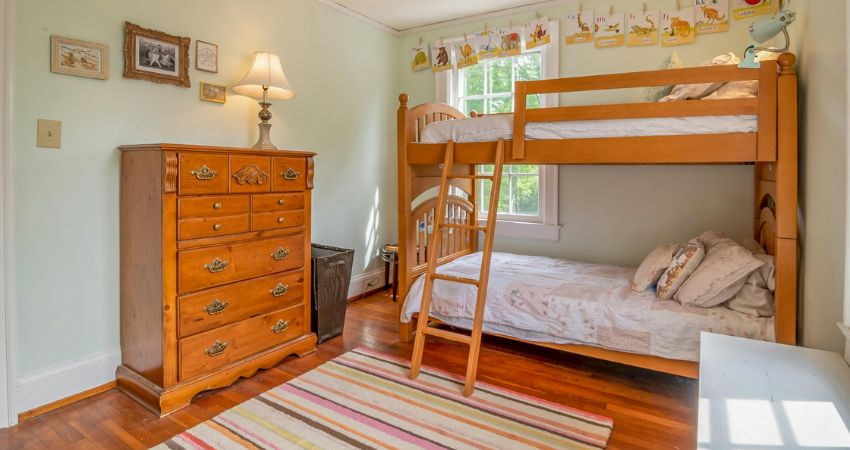
The room has a soft, timeless look with pale green walls, natural wood furniture, and a bright striped rug. The color palette is calm but still playful, which is ideal for a child’s room because it supports rest without feeling dull. The natural light from the window makes the space feel open and fresh, which is especially valuable in a kids’ bedroom where you want the room to feel airy and easy to maintain.
The interior also balances order and warmth very well. There is enough furniture to make the room functional, but it does not feel crowded. That is an important idea for kids’ bedroom design, because children need open floor space for play as well as a comfortable sleeping space.
Bed as the focal point
The most eye-catching element is the bunk bed, which immediately signals a shared or sibling bedroom setup. The bed design uses a sturdy wooden frame with a ladder placed at the front, making the structure feel classic and practical at the same time. A bunk bed is a smart choice for a children’s room because it saves space and gives two sleeping areas without needing two full bed frames.
The top bunk sits near the window and under a decorative line of alphabet cards, which adds a playful educational touch. This arrangement makes the bed area feel special instead of purely functional. In a kids’ room, the bed can become a built-in feature rather than just a place to sleep, especially when styled with soft bedding, pillows, and cheerful wall decor.
The bottom bunk is simple and cozy, with light bedding and several pillows that make it feel comfortable and welcoming. The lower bed has a tucked-in, lived-in appearance that works well for children because it suggests comfort without requiring formal styling. The wooden ladder also becomes part of the room’s visual rhythm, drawing the eye upward and making the bunk bed feel like a mini indoor structure.
Design ideas from the bed
This room offers several useful ideas for a kids’ bedroom centered on the bed. First, the use of a wooden bunk bed shows how a bed can solve space problems while also adding charm. Second, the neutral bedding allows the frame and room accessories to stand out, which keeps the room from looking too busy. Third, the ladder placement and bunk layout create a playful sense of adventure that many children enjoy.
If you are designing a similar room, the bed can be treated as the anchor piece around which everything else is arranged. For example, you could place the bed near a window for daylight, use a soft rug to define the sleep zone, and add storage furniture on the opposite wall so the room remains balanced. This room shows that a kids’ bed does not need bright colors to feel child-friendly; it can rely on proportions, texture, and accessories instead.
Furniture around the bed
The tall wooden dresser on the left side of the room complements the bunk bed beautifully. Both pieces use warm wood tones, which create visual harmony and give the bedroom a coordinated, vintage-inspired feel. This is a good lesson for bedroom planning: when the bed is made of natural wood, matching or similarly toned storage furniture can make the room feel more intentional.
The dresser also adds important storage for clothes, books, or toys, which keeps the bedroom organized. In a child’s room, storage is just as important as the bed itself because clutter can quickly take over. The combination of a bunk bed and a large dresser works well when the goal is to maximize functionality without making the room feel overly modern or cold.
There is also a small lamp on the dresser, which adds a softer, more comforting atmosphere. Good bedside or dresser lighting is important in a children’s bedroom because it creates a calmer environment for reading, winding down, or getting ready for bed. In this room, the lamp helps the bed area feel cozy and personal, even though it is part of a shared sleeping setup.
Wall decor and learning theme
One charming detail is the string of alphabet cards displayed high on the wall near the ceiling. This gives the bedroom a learning-oriented feel, which is perfect for a child’s space. It suggests that a kids’ room can combine sleep, play, and early education in one thoughtful design.
The framed pictures on the wall also help soften the space and add a family-friendly personality. Instead of using bold posters or highly themed decor, the room uses small framed art pieces, which makes the bedroom feel timeless. This approach works especially well if you want the bed and furniture to remain useful as children grow older.
For bedroom inspiration, the decor here shows that the bed does not need to be surrounded by overwhelming patterns. Small decorative accents above and around the bed are enough to create interest. That keeps the room calm, which is often better for sleep quality, especially in a bedroom shared by children.
Floor, color, and comfort
The striped rug on the floor brings a lot of energy into the room. Its pastel and warm tones echo the soft, child-friendly feeling of the space while also helping define the sleeping area. A rug like this can make the room feel more comfortable underfoot and can also soften the look of the bed area.
The polished wooden floor adds warmth and makes the room look clean and bright. It also provides a nice contrast to the soft bedding and textured rug. In kids’ bedrooms, this kind of contrast is useful because it helps the room feel layered and complete without relying on overly decorative furniture.
The overall comfort of the room comes from the blend of soft textiles and sturdy furniture. The bed offers a sense of security through its solid wooden frame, while the rug, pillows, and bedding add softness. That balance is exactly what makes a child’s bedroom feel both practical and comforting.
Bedroom idea for families
This image is a strong example of how to design a shared kids’ bedroom around a bunk bed. It shows that the bed can be the centerpiece while still leaving room for storage, light, and movement. The room feels suitable for siblings because it creates individual sleeping levels while maintaining a unified look.
It also works well as a long-term design idea because the furniture is not overly babyish. The wooden bed, classic dresser, and neutral walls can adapt as the children grow. You could easily update the bedding, wall art, or rug later without replacing the main bed structure.
If you want to recreate this style, think of the bedroom as a peaceful, organized space with one strong central bed feature. Use warm wood, soft wall colors, simple bedding, and a few playful details like alphabet art or colorful rugs. That combination creates a room that feels safe, cheerful, and practical for everyday family life.