In the bustling modern world, where the pace of life often feels relentless, our homes serve as our ultimate sanctuaries. Within these sanctuaries, many find that a dedicated space for reflection, prayer, and meditation is not just a cultural tradition but a psychological necessity. The image of this breathtaking wooden pooja room interior perfectly encapsulates the intersection of ancient craftsmanship and contemporary home aesthetics.
Designing a pooja room is more than an exercise in interior decoration; it is an act of creating a spiritual anchor. Let’s explore how the elements in this specific design contribute to a sense of peace, and how you can replicate this divine atmosphere in your own home.
1. The Soul of the Room: Wood and Warmth
The foundation of this interior is its rich, dark wood craftsmanship. In Vastu Shastra and traditional interior design, wood is considered a “living” material that grounds the energy of a room.
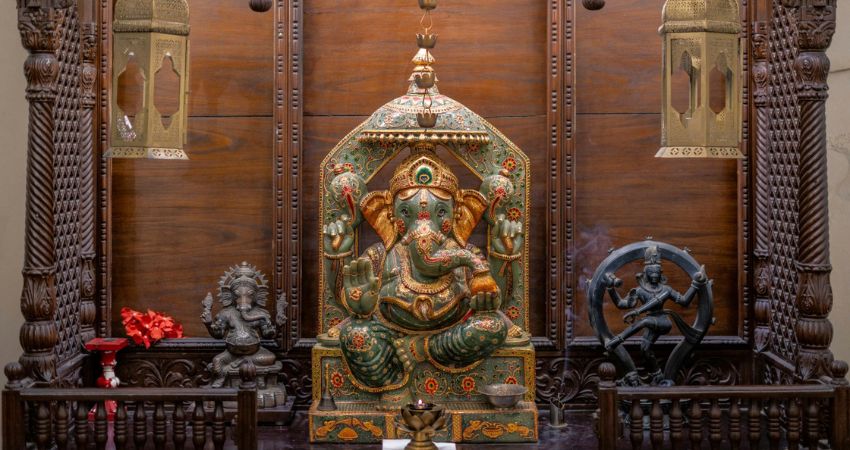
- Intricate Carvings: Notice the pillars flanking the idols. The twisted, fluted columns and the ornate “toran” style archway at the top create a frame that elevates the deities. This architectural framing signals to the mind that you are entering a space set apart from the mundane world.
- The Backdrop: The horizontal wooden panels behind the central Ganesha idol provide a clean, structured look that contrasts beautifully with the organic curves of the sculptures.
Pro Tip: If you are working with a smaller apartment, you don’t need a full room. A wall-mounted wooden mandir with similar hand-carved details can provide the same “temple” feel without the large footprint.
2. The Central Masterpiece: Lord Ganesha in Jade Tones
The focal point of this room is the stunning, green-hued Ganesha. Traditionally, Lord Ganesha—the remover of obstacles—is the first deity honored in any prayer.
Color Symbolism
The deep forest green and gold embellishments on the central idol aren’t just for show. Green represents nature, growth, and rebirth, while the gold accents symbolize prosperity and the light of knowledge. The intricate stone work (often referred to as Meenakari or stone-encrusting) adds a layer of “Vaibhav” (grandeur) that makes the space feel regal.
Symmetry and Balance
To the left, we see a smaller, classic bronze Ganesha, and to the right, a striking Nataraja (the dancing Shiva). This arrangement creates a balanced “Trimurti” effect, representing different facets of cosmic energy:
- Wisdom (Ganesha)
- Creation/Destruction (Shiva)
- Stability (The central green Ganesha)
3. Lighting: The Glow of Divinity
Lighting is perhaps the most underrated element of pooja room design. In this image, we see a masterful blend of traditional and functional lighting.
- Hanging Brass Lanterns: The two Moroccan-style perforated brass lanterns hanging from the ceiling are genius additions. When lit, they cast intricate shadows across the wooden walls, creating a “play of light” that feels ethereal.
- The Oil Lamp (Diya): At the base sits a lotus-shaped brass Diya. In Indian culture, the flame of the lamp represents the soul reaching toward the Supreme. Placing it on a white cloth or marble base ensures cleanliness and focus.
- The Bell Chain: The brass chain hanging directly over the central idol is both functional and symbolic. The sound of a bell is said to clear the mind of scattered thoughts, preparing the devotee for deep focus.
4. Sensory Details: Incense and Offerings
A truly immersive pooja room engages all five senses.
- Scent: In the image, a thin wisp of smoke rises from an incense holder. Using natural scents like sandalwood, oud, or jasmine can instantly lower cortisol levels and trigger a “meditation mode” in the brain.
- Nature: The pop of red flowers on the left provides a necessary contrast to the brown and green palette. Fresh flowers bring Prana (life force) into the room.
5. Modern Integration: How to Adapt This Style
You might look at this and think, “This is beautiful, but I live in a modern minimalist condo.” The good news? You can adapt these elements.
The “Niche” Concept
If you don’t have a dedicated room, create a “Niche Mandir.” Use one recessed wall or a quiet corner. Install a backlit wooden panel (Jali work) to mimic the intricate carvings seen in the pillars of our reference image.
Material Mixing
Notice the metalwork. Mixing Brass, Bronze, and Stone creates a timeless look. Even in a modern home, a single high-quality brass lamp or a stone idol can act as a bridge between the old and the new.
6. Vastu Tips for Your Pooja Room
To ensure your sacred space radiates positive energy, keep these traditional Vastu guidelines in mind:
- Direction: Ideally, the pooja room should be in the North-East (Ishanya) corner of the house.
- Facing: While praying, you should ideally face East or North.
- Clutter-Free: Notice how the floor of the mandir in the photo is clean. Avoid storing unrelated household items in the cabinets below the idols.
- Height: The idols should be placed at a height where the base is at the level of the devotee’s chest when sitting or standing.
7. The Psychology of the Sacred Corner
Beyond religion, why does a room like this matter? Environmental psychology tells us that “restorative environments” are essential for mental health.
Having a space that is visually distinct from your home office or kitchen allows your brain to “switch off.” The dark wood provides a visual “quiet,” while the golden accents provide “inspiration.” It is a place where you can sit for five minutes every morning to set your intentions, or five minutes every evening to let go of the day’s stresses.
Final Thoughts
The pooja room in the image is a masterclass in Traditional Indian Luxury. It doesn’t rely on bright, garish colors; instead, it uses texture, craftsmanship, and lighting to create a feeling of profound depth.
Whether you are building a new home or looking to refresh your current prayer space, remember that the most important element is intentionality. Start with a beautiful focal point—like a hand-painted Ganesha—and build around it with warm wood and soft, golden light. Your home isn’t just where you live; it’s where your spirit finds its center.