In the world of interior design, there is a recurring debate between sleek, clinical minimalism and the enduring appeal of “cozy warmth.” The living room shown here is a definitive argument for the latter. It is a space that doesn’t just look beautiful—it feels like a long, deep exhale after a chaotic day. By masterfully balancing rich textures, earthy hues, and functional design, this room showcases how to turn a standard floor plan into a sanctuary of comfort.
The Harmony of Earth Tones
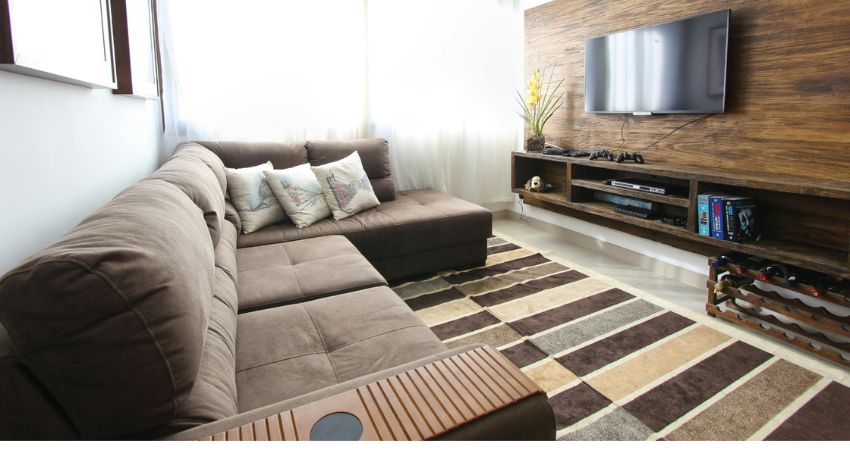
The foundation of this room’s inviting atmosphere is its deliberate color palette. Rather than opting for stark contrasts, the design leans into a monochromatic warmth—layers of chocolate brown, mocha, and cream.
- The Power of Brown: Often misunderstood as “dull,” brown is actually the ultimate neutral for relaxation. It grounds the room, providing a sense of stability and connection to nature.
- Textural Layering: To prevent the room from feeling flat, the design utilizes varied textures. You have the soft, microfiber-style upholstery of the sectional, the sleek, rigid wood of the floating media unit, and the plush, woven threads of the striped area rug. This tactile diversity is what makes the space feel layered and intentional.
Floating Functionality: The Media Wall
One of the most impressive features of this room is the custom-built, floating media console. In smaller living areas, “floating” furniture is a pro-level trick for two reasons:
- Visual Weightlessness: By elevating the wooden console off the floor, the room feels larger and less cluttered. It creates an illusion of extra square footage while still providing ample storage for media devices, books, and even a dedicated wine rack at the base.
- Cohesion: The use of the same rich, distressed-wood finish on both the TV wall panel and the console creates a “frame” for the television. This turns a functional piece of technology into an integrated design element rather than an eyesore.
The “Nest” Factor: Why the Sectional Works
A living room is only as good as its seating, and this L-shaped sectional is designed for maximum “nesting.”
- The Corner Advantage: By pushing the sofa into the corner, the layout maximizes floor space, allowing for easy movement throughout the rest of the room.
- The Built-in Utility: Notice the wooden armrest on the sofa, which features a circular indentation—likely a coaster or a charging pad. This is a brilliant example of intentional design. It eliminates the need for bulky side tables, keeping the walkways clear and the look streamlined.
Softening the Edges with Light
No matter how beautiful the furniture is, a room dies without proper lighting. Here, the floor-to-ceiling sheer white curtains are the silent heroes.
- Diffused Natural Light: The curtains soften the sunlight, turning harsh midday glare into a gentle, ambient glow. This “soft-focus” lighting effect makes the brown upholstery look even more inviting.
- Balanced Contrast: The stark white of the curtains acts as a “palette cleanser” for the room, preventing the deep brown tones of the sofa and wood paneling from feeling too dark or enclosed.
Design Takeaways for Your Own Home
If you want to replicate this look of “accessible luxury” in your own living space, keep these three principles in mind:
- Don’t Fear the Wood: Wood adds warmth that metal and glass simply cannot replicate. If you have an empty wall, consider installing a wooden panel behind your TV to instantly add character.
- Prioritize the Rug: The striped, multi-tone rug in the image is what ties the brown sofa to the lighter walls. A well-chosen rug can define the “zone” of your living room, separating it from the rest of the home.
- Keep it Organized: Notice that despite the space being filled with “comfort items” (pillows, books, electronics), nothing looks messy. Everything has a home, from the wine bottles to the console storage. A tidy space is always more luxurious than an expensive, cluttered one.
This living room is a reminder that the best interiors are those that prioritize the human experience. It is a space built for lounging, reading, entertaining, and unwinding. In a world of fleeting trends, this kind of timeless, warm-tone comfort is always in style.